Recent headlines about a lawsuit involving a major point-of-sale provider have a lot of shop owners asking a fair question: am I actually paying what I was told I'd pay? We aren't going to recap that case or name names. What we can do is help you look at both sides of the bill — your POS system and your card processor — so the price you were quoted is the price you actually pay.
We already covered the layers of card processing in What Are You Really Paying to Take Credit Cards?. This post is about the bigger picture: software, hardware, contracts, and fees that can even show up on your customers' receipts.
Why the Headline Price Is Rarely the Whole Price
A low monthly rate or "free" hardware can be a legitimate way to structure a deal. Plenty of shops prefer to pay more per transaction and less up front. The problem is when the rest of the cost is hard to see: a higher processing rate, a long contract, or conditions tucked into a long merchant agreement. If you can't explain what you pay each month, what you pay per sale, what you own, and what it costs to leave, ask for the rest in writing before you sign.
Fees and Fine Print to Watch For
Not every fee on this list is unfair. You just deserve to know about it in advance.
Processing markups. The quoted rate is often only part of what you pay. The processor's markup, and how transactions are categorized, can change your real cost. We cover interchange, pricing models, and how to calculate your effective rate in our earlier guide.
"Technology," "service," or "platform" fees. Some bills add a monthly software subscription or a "technology" or "service" fee on top of processing. Add-ons like online ordering, loyalty, or reporting may be billed separately. Get a written list of what's in the base price and what costs extra.
Fees passed on to your customers. Watch for surcharges, convenience fees, or "online ordering" fees on a guest's receipt. You should know who set the fee, who keeps the money, and whether you agreed to it. A fee added without a clear okay from you can surprise your customers and come back to you when they complain.
Hardware leases and "free" equipment. Know whether you own your terminals and printers or you're renting them. A lease can run far longer than the equipment is worth. If hardware is advertised as free, ask the conditions: some agreements require you to start processing by a deadline, or to return the equipment (or pay its full retail value) if you leave.
Long contracts, auto-renewal, and early termination fees. How long are you locked in? Does the agreement renew automatically, and how much notice do you have to give? What's the early termination fee, in dollars, for the remaining months? Get that number in writing before you sign. It's sometimes buried in a long contract.
PCI fees, monthly minimums, and statement fees. Many processors charge for PCI compliance, plus a bigger fee if you haven't finished your annual self-assessment — that second one is usually avoidable. If your fees don't reach a set amount in a slow month, you may pay the difference. Statement, batch, and "account maintenance" fees look small alone but add up, especially for seasonal shops.
Inactivity fees and add-on subscriptions. Ask what happens if you close for a few weeks — some agreements still charge a monthly fee when you aren't processing. And be careful of extra subscriptions that appear on a later bill. You should have to agree, clearly, before a new recurring charge starts.
Questions to Ask a POS Provider Before You Sign
- What's the all-in monthly cost for the software I actually need, and which features cost extra?
- Is the hardware purchased, leased, or "included" in exchange for a higher processing rate? What happens to it if I leave?
- How long is the contract, how does auto-renewal work, and what's the early termination fee — in dollars?
- How do I cancel, and can I do it as easily as I signed up?
- Will any fees be added to my customers' receipts or online orders? Who keeps that money, and do I have to agree in writing?
- What happens if my store is closed for a stretch?
- Do I have to process cards through you, or can I use my own processor?
- Can you show me a sample monthly bill for a shop of my size?
A straightforward provider will answer these directly. If the only answer is "it's all in the agreement," ask them to point to the page.
Questions to Ask a Card Processor Before You Sign
- What pricing model am I on, and what exactly is your markup?
- Please list every monthly, annual, and per-batch fee in writing.
- How will I be notified if my rates change?
- What would I pay if I left, and when does the contract renew?
- Do I own the terminal, or am I leasing it?
- What do I need to do to avoid PCI non-compliance fees?
- If I change POS systems later, can I keep this processing account?
How to Read What You're Already Paying
Pull last month's POS bill and your processing statement. Write down your total card sales and every fee you paid, then divide total fees by total sales. That effective rate is the most useful single number you've got.
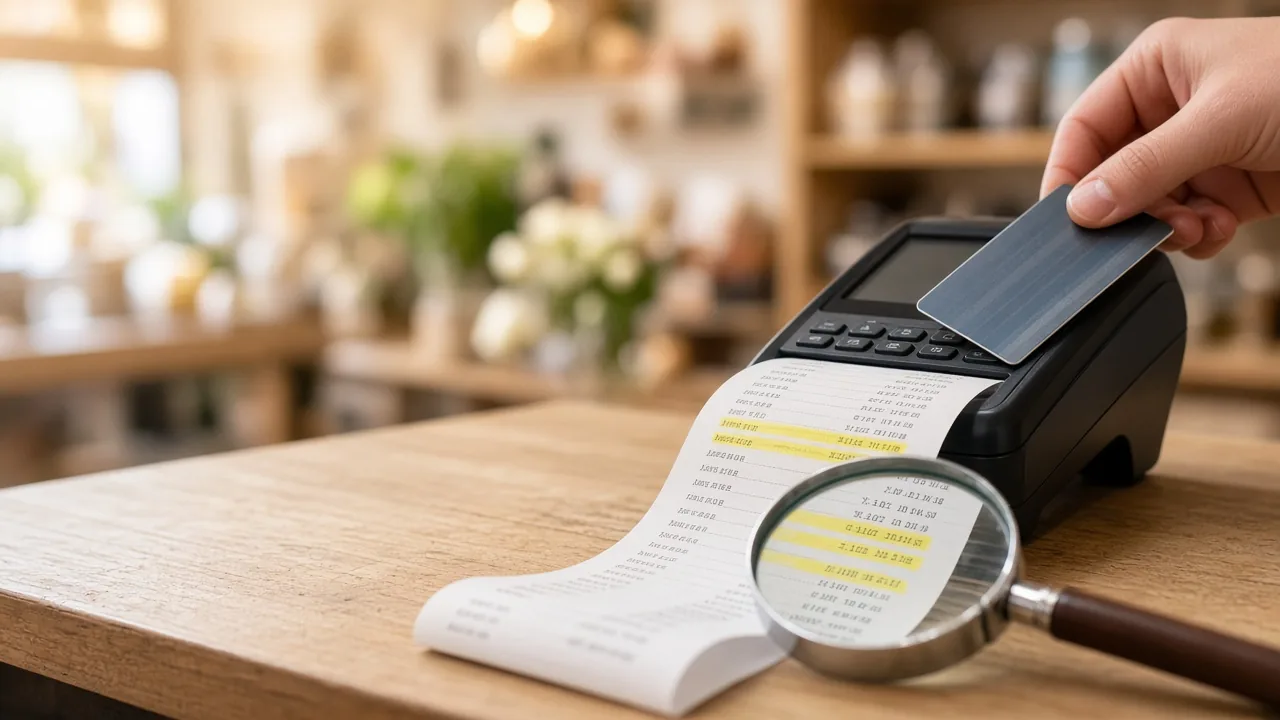
Highlight every charge that isn't tied to a single transaction, and check whether any fees were passed through to customers. Then compare a few months. New line items and a rising effective rate, without a big change in your sales or card mix, are a reason to ask why. We walk through this in more detail in the 15-minute guide in our earlier post.
Red Flags
- Vague answers, or a salesperson who doesn't want to put the fees in writing
- Pressure to sign today to "lock in" a rate
- A headline price that only holds up if you read a long footnote
- You can sign up online in minutes, but canceling means phone trees, waiting periods, or a special form
- Fees on customer receipts or online orders you didn't clearly approve
One or two of these doesn't always mean you should walk away. A pattern of them usually does.
What Fair Pricing Looks Like
Fair doesn't have to mean cheapest. It means you can see the whole deal: the monthly software cost, the processing markup, and every recurring fee, in writing, before you hand over billing information. You know whether you own the hardware and what it would cost to walk away. Cancellation terms are clear, not buried. No one adds a fee to your customers' tickets unless you've agreed to it and can explain it.
If a provider or processor can do that, you're in a much better position, even if they aren't the cheapest quote you got.
Let Us Take a Look: Free Statement Review
Custom Software Inc. is a Terre Haute company, and we work with small retailers across the Wabash Valley and up through Indianapolis. If you'd like a second set of eyes, bring us a recent processing statement or a POS quote and we'll go through it with you for free. We'll explain the charges and give you an honest opinion.
We work with processing partners including Global Payments and XplorPay, and we'll tell you plainly how the pricing works. There's no pressure. Sometimes the answer is "you're in good shape," and we'll tell you that too.
Give Custom Software Inc. a call at (812) 234-3242 or send us a message.
See it running in 15 minutes
No pressure, no commitment. We’ll show you the register and back office and answer your questions.